
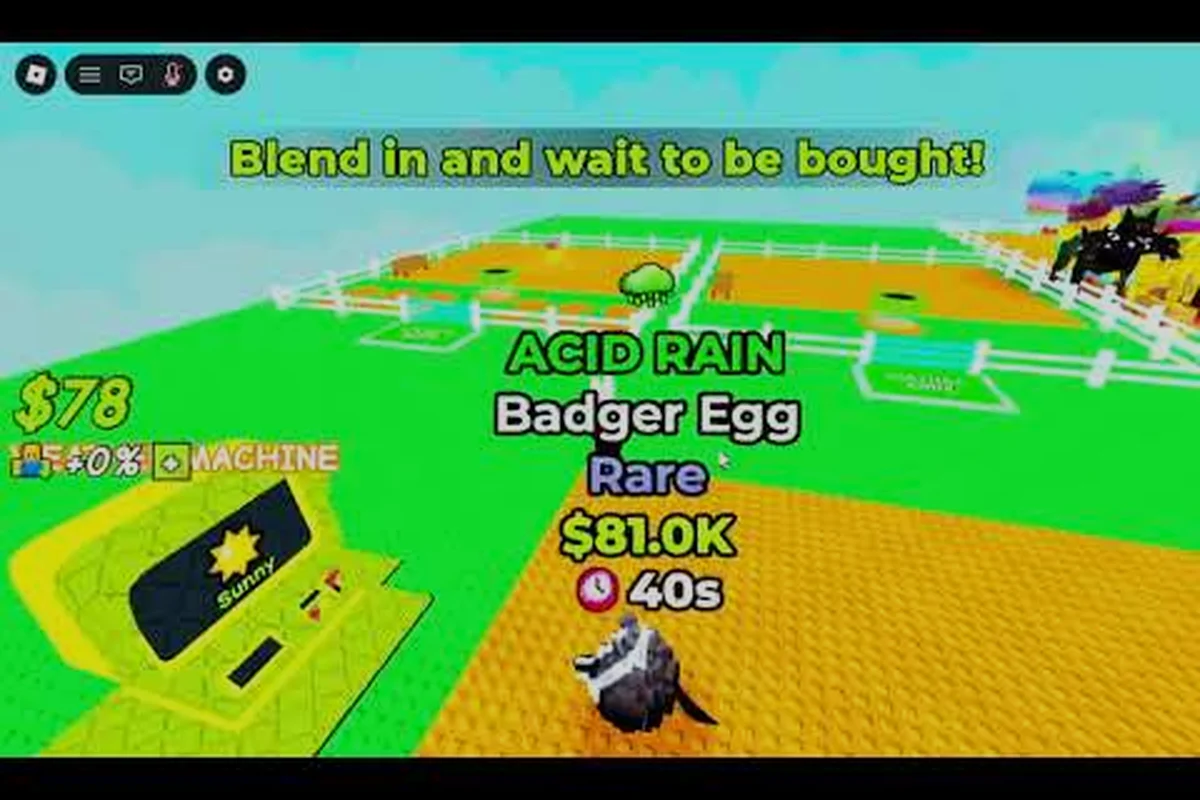
This Fake an Egg tutorial walks new players through the core loop: earn coins, buy eggs, hatch pets, and use the egg disguise to collect money safely. Follow the practical roadmap from your first coin purchase to smarter disguise timing and faster progression.
Tutorial Roadmap for New Players
A strong Fake an Egg tutorial starts with the basic loop: earn coins, acquire eggs, hatch pets, and use disguises to collect more money. These decisions matter because weak early habits can leave you repeating easy tasks instead of unlocking the gameplay features that support faster progress.
This guide follows the Fake an Egg gameplay loop in a practical order, beginning with your first coin purchase and ending with risk decisions built around the egg disguise. The key is to treat each stage as a budget choice: buy a manageable egg early, build a pet roster without draining your coin reserve, and deploy the disguise when collecting would otherwise expose you. For example, the table’s “First minutes” step emphasizes spending only part of your coins, while the midgame shift to disguise timing can prevent a failed collection without sacrificing long-term pet progress.
-
First priority: learn the basic coin-and-egg loop.
-
Early goal: hatch useful pets without tying up all your money.
-
Midgame goal: use the egg disguise to reduce risk.
-
Late goal: improve efficiency instead of relying on repeated failures.
Because the game centers on collecting, buying, and disguising yourself as an egg, understanding how those pieces connect is more useful than memorizing isolated tips. The following sections break down the progression loop, disguise strategy, pet value, and coin-earning decisions.
| Progression stage | Main objective | Best action | Common mistake |
|---|---|---|---|
| First minutes | Learn the basic loop | Buy a manageable egg and earn coins | Spending every coin at once |
| Early game | Build a pet roster | Hatch gradually and compare results | Keeping low-value duplicates |
| Midgame | Reduce collection risk | Use the egg disguise | Hiding when a faster target is available |
| Late game | Improve efficiency | Combine income, pets, and disguise timing | Chasing only one rare pet |
Understanding Fake an Egg Gameplay
The gameplay revolves around earning coins, purchasing eggs, and hatching pets that support your activities. The exact prices, rewards, and drop details can change as the game updates, so treat the examples here as a progression framework rather than a permanent price list.
The most important relationship is that money comes first, and pets come second. A larger collection may look impressive, but a balanced roster helps you continue buying and hatching when you need to spend your income quickly. For example, saving coins for a stronger egg can produce a pet that generates more income than several low-value pets, so compare the egg’s cost, hatching odds, and possible pet value before purchasing. Keep a reserve for the next round, then reinvest only the surplus from your current pets; otherwise, a tempting collection can leave you unable to afford the eggs needed to sustain your coin income.
Core progression loop
Start by completing available coin activities, then visit the purchase area and buy an egg you can afford without emptying your balance. Hatch it, review the pet you received, and repeat. Keep enough currency for the next purchase so this cycle does not stop every time a disappointing result appears.
| Priority | Reason | Practical result |
|---|---|---|
| Maintain income | More coins create more buying options | A failed hatch does not end progress |
| Hatch regularly | Eggs are the main source of pets | The roster grows at a steady rate |
| Track outcomes | Results reveal what you receive over time | Less money wasted on duplicate purchases |
| Improve timing | Better choices preserve resources | More attempts without reckless spending |
Reported player behavior consistently points to a simple lesson: beginners who rush to spend often believe they are progressing quickly, while more efficient players reserve enough money to repeat the egg cycle. This is a basic economy principle rather than a guaranteed reward, so results still vary with the prices and options available in the current version.
Starting as a new player
Your first priority should be understanding movement, interaction, and the location of the egg seller. Spend the opening minutes collecting coins and making one affordable purchase. That first egg teaches the full gameplay loop without requiring an advanced pet or risky maneuver.
Once the basic process is familiar, compare pets by their usefulness to your current needs. Do not assume the most expensive-looking pet is automatically the best choice. A smaller pet that supports earning or movement can deliver more value than a rare pet that does not fit your routine.
For a broader overview of early objectives, use the Fake an Egg beginner guide to organize your first sessions before applying the more advanced methods in this tutorial. Treat that guide as a progression roadmap: first learn the egg seller’s location and the basic movement-and-interaction loop, then test the beginner methods on early eggs before attempting riskier tricks. This creates a clear benchmark for comparing ordinary egg outcomes with the results of the advanced techniques covered here.
Buying Eggs and Hatching Better Pets
Buying and hatching eggs is the clearest progression route in Fake an Egg gameplay because it converts coins into collectible companions. A better buying routine comes from balancing cost, remaining funds, and the pet value you actually need: compare each egg’s price with the pet’s final form, avoid buying another copy when the current pet already fills that role, and save enough coins for a stronger egg rather than spending every balance immediately. Hatching a duplicate can still provide a pet for your collection, but repeated low-value pets may drain funds faster than they improve your setup.
Set a spending rule
Never spend your entire balance on the first attempt unless you have deliberately reached a safe stopping point. Keep enough coins to repeat the purchase, and treat any extra savings as protection against a run of unhelpful results. This approach is especially useful for beginners because it prevents one disappointing hatch from creating an unnecessary grind.
| Buying style | Upside | Downside | Best use |
|---|---|---|---|
| Spend everything | Maximum immediate attempts | Very little recovery room | End of a session with strong income |
| Spend part | More attempts over time | Slower collection growth | Regular early progression |
| Save aggressively | High safety margin | Fewer pets early | Preparing for a specific target |
The exact egg options and their costs should be checked in the current interface because no dependable official price table was available for this article. Regardless of price, the safest rule remains simple: buy from the top of the affordable range, not above it.
Evaluate the Entire Hatch Before Buying More
Treat each hatch as a result to record, not merely a pet to collect. Note the pet, whether it duplicates an existing one, and whether it changes your preferred activity. This creates a lightweight record that can reveal patterns without claiming that a particular pet has a guaranteed fixed value.
Duplicate pets do not automatically represent wasted money. A duplicate may look redundant, but it can still provide value if the game rewards collecting several copies or if your best build benefits from multiple similar companions. The coin and pet progression guide provides a useful next step for deciding when to save and when to push your collection forward.
Using the Egg Disguise Safely
The egg disguise is one of the most recognizable Fake an Egg tricks because it supports a simple idea: blending into an area where eggs naturally belong can make collection less obvious. However, the disguise should support your route, not replace good timing or map awareness.
Choose a reason to hide
Use the disguise when it reduces risk around active players, crowded areas, or moments when you need to approach the collection area. Spending the disguise during a quiet route wastes its value because nothing forces you to stay hidden. Treat it as a risk-management tool rather than a permanent state.
| Situation | Disguise value | Recommended action |
|---|---|---|
| Crowded collection area | High | Hide briefly and choose a safer route |
| Open area with little traffic | Low | Collect normally and preserve disguise utility |
| Player nearby at collection time | High | Break line of sight before acting |
| No pressure but a fast route exists | Medium | Hide only if it improves travel time |
For example, if a player approaches while you are near the collection area, break line of sight first and use the disguise to cover the short movement window instead of activating it early. The egg disguise and stealth guide expands on when concealment is most useful, including crowded routes, nearby players, and other situations where preserving your disguise can prevent exposure.
Avoid predictable patterns
Players who repeatedly hide in the same place can become easier to identify. Change your approach by collecting early, waiting, or taking a less obvious route when the area is busy. The most effective disguise use comes from combining the appearance with smart movement, because the egg alone cannot prevent another player from reacting if the route becomes obvious.
A practical routine is to scout first, choose the exit you intend to use, and enter disguise only when the threat level justifies it. Save the rest of your route for after you leave the crowded zone. This is a disguise timing rule: hide for the dangerous part, not the entire journey.
Earning Coins and Spending Them Wisely
Coins determine how often you can buy eggs, and income is therefore the engine behind collection progress. Strong Fake an Egg tips focus on repeatable routines instead of hoping for a single lucky event. Find the activity that gives you steady coins, complete it efficiently, and reinvest most of the proceeds.
Separate income from spending time
A longer session can produce more coins, but inefficient repetition can waste the opportunity. Before continuing an activity, compare the result with the best alternative available at that moment. If a different route offers more coins for less travel, changing activity may be the better use of time.
| Decision | Strong choice | Weak choice |
|---|---|---|
| Buying eggs | Buy while keeping a recovery balance | Empty the balance after one hatch |
| Collecting coins | Repeat the safest efficient route | Stay in a dangerous area for a small gain |
| Using disguise | Apply it when pressure is visible | Hide automatically at the first sign of another player |
| Evaluating pets | Use what supports your routine | Delay all progress for one target |
Make Every Session Follow a Routine
A stable session depends on managing the full Fake an Egg economy rather than following one fixed route. For example, finish a reliable coin activity, keep a reserve, and spend only after checking whether the next egg purchase improves variety without reducing pet care funds; this creates a repeatable loop for a fake an egg tutorial focused on steady progression.
-
Income: Complete a reliable coin activity before spending.
-
Purchase: Buy one affordable egg and preserve a small reserve.
-
Hatch: Review the result and record whether it adds useful variety.
-
Risk check: Use the egg disguise only when the route becomes contested.
Repeat the cycle as long as income remains efficient. When it slows down, change activities rather than repeating a weak route. This makes your Fake an Egg how to approach practical: the answer is not a single task, but a sequence that keeps money, eggs, and pets moving at the same time.
Comparing Smart and Risky Player Strategies
Every strategy has a tradeoff. The best choice depends on your balance, current pets, the behavior of nearby players, and how much session time remains. Comparing these options makes it easier to recognize when caution is useful and when it is merely slowing progress.
| Strategy | Coins per unit of time | Risk | Best moment |
|---|---|---|---|
| Safe repeated farming | Moderate | Low | Early game or low player traffic |
| Disguised collection | Moderate | Low to moderate | Crowded collection zones |
| Direct collection under pressure | Variable | High | Very short routes with a clear exit |
| All-in egg purchases | Low immediate efficiency | High economic risk | Strong reserves and a specific target |
| Passive pet collection | Varies | Low | While completing other activities |
Match the strategy to the situation
A cautious approach is strongest when your balance is small. Losing a run of coins can delay every future purchase, so preserving capital matters more than taking one extra risk. An experienced player with a larger reserve can accept more exposure, provided the route offers a clear reward and exit.
During a crowded session, disguise and route planning reduce unnecessary losses. During a quiet session, hiding may accomplish little. During a long session, frequent purchases can consume resources before income is fully optimized, so pacing becomes more important than speed.
This comparison also explains why community advice often emphasizes sensible progression rather than one universal strategy. Reported player routines vary because server conditions, available activities, and personal goals differ. The transferable rule is to protect your next purchase while looking for a repeatable way to earn more.
Advancing After the First Collection
Once you have a basic pet collection and understand the egg economy, progress becomes more about efficiency and flexibility. You can then test which pets improve your routine, compare different earning paths, and decide whether a rebirth is worth the temporary reset.
Choose a Pet Role Before Spending
Instead of asking only which pet is rarest, identify what each useful pet contributes. Consider movement, collection, coin output, or the ability to support a disguise-heavy strategy. Because exact pet abilities and rarity values may change, verify the current in-game descriptions before making an expensive commitment.
| Pet evaluation | Question to ask | Why it matters |
|---|---|---|
| Utility | Does it improve a task you repeat? | Consistent utility usually beats unused rarity |
| Synergy | Does it work with your disguise or route? | Combined benefits can shorten sessions |
| Duplicates | Is another copy useful? | Duplicates may help collection goals |
| Opportunity cost | What purchase would you delay? | Every pet occupies the same limited budget |
Players who reach a rebirth decision often compare the same questions: lost progress, restored rewards, and how soon they can recover. The rebirth strategy analysis helps organize that decision, while this tutorial keeps the focus on improving each session before making a reset.
Review performance after several cycles
Track four simple numbers across multiple runs: coins collected, coins spent, eggs purchased, and pets obtained. A pattern of steady purchases is generally healthier than one lucky hatch followed by repeated losses. Use the results to decide whether your current income route deserves another session or should be replaced.
| Metric | Healthy pattern | Warning sign |
|---|---|---|
| Eggs purchased | Several across multiple sessions | Only one purchase after a long session |
| Remaining balance | Enough for the next planned purchase | Zero after every attempt |
| Pet variety | Growing over time | Mostly duplicates with no usable role |
| Time per coin | Stable or improving | Slowing with every repeated run |
Treat each run as a controlled comparison: change only one part of the income route, such as the coin farm, pet assignment, or egg-purchase timing, and compare the resulting time per coin with the previous run. If a route produces faster income but leaves too little cash for the next egg, it is not an improvement. A good Fake an Egg tutorial therefore becomes a repeatable system, preserving reliable farming methods, replacing weak routines, and judging every adjustment by measured results rather than by a single lucky hatch.
Frequently Asked Questions
What is the most important skill in Fake an Egg?
The most important skill is balancing income, spending, and risk. Keep enough coins to purchase another egg, use the egg disguise when another player creates pressure, and avoid spending the entire balance on a single attempt. This routine creates more consistent progress than relying on one lucky hatch.
Should beginners use the egg disguise all the time?
No. The disguise is most valuable in crowded areas, near active players, or when your collection route crosses a visible location. In a quiet area, collecting normally preserves the disguise for a more dangerous moment and can make your gameplay more efficient.
How can I get better pets without wasting coins?
Buy eggs gradually, record each result, and keep a reserve for future attempts. Look for useful variety instead of assuming that the rarest appearance always offers the greatest benefit. A pet that improves your regular coin route may be more valuable than a rare pet you rarely use.
Is it better to hide or run when another player appears?
That depends on your position and escape route. Hide when the nearby player could easily follow you or reach the same collection area, especially if the disguise breaks their visual expectation. Run when you already have distance, a clear exit, and a faster route to safety.
What should I do before buying another egg?
Complete enough coin-earning activity to cover the purchase and preserve a small recovery balance. Also check the current egg options, nearby player activity, and your remaining session time. Buying while these factors are clear reduces the chance that an unfavorable hatch or ambush ends productive play.