
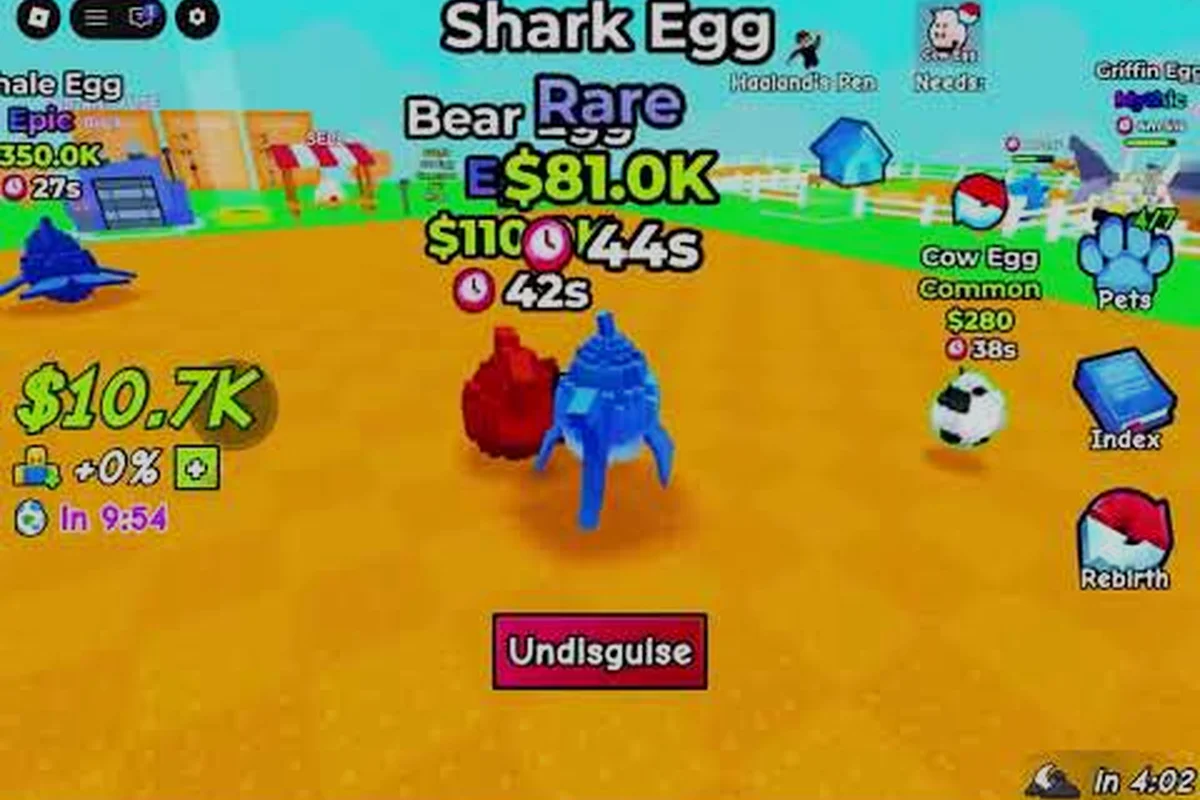
Pet trading in Fake an Egg can turn a lucky hatch into a major collection advantage, but a rushed exchange can cost you far more than one pet. This Fake an Egg trade guide explains how to compare value, prepare your inventory, negotiate clearly, recognize suspicious requests, and complete a safer handoff.
What Makes a Fake an Egg Trade Guide Useful?
A good trading plan protects both sides of the deal. You need to know what you own, what the other player wants, and what can be transferred before you commit. The biggest mistake is treating rarity as the only value marker, because demand, duplicates, and collection goals can change what a fair offer looks like.
The desired pet is the pet you hope to receive, while the offered pet is what you provide in return. Keep those roles separate during negotiation so you can evaluate the full exchange instead of focusing on the pet that seems most exciting.
A reliable trade checklist should compare each pet’s tier and ability value against current demand, duplicate levels, and the collection goals of both players. For example, a lower-tier pet may be worth more than a rare one if the rare pet is already heavily duplicated, while a desired pet with a useful ability can justify offering a less popular pet instead of several low-demand ones. Reviewing these factors before committing helps prevent a trade from becoming one-sided.
-
Record the full name, tier, and relevant abilities of every pet involved.
-
Confirm the trade method before moving, removing, or combining anything.
-
Verify that both players can see the same offered items.
-
Recalculate value after every counteroffer.
-
Refuse a deal that creates urgency, pressure, or unusual requests.
-
Complete a test transfer when inventory management is unfamiliar.
The complete pet list and tier reference can help you identify what you own before negotiating, so you never offer a pet you actually need for income or collection goals. A larger collection is not automatically a stronger trade position, so knowing the market’s basic demand matters more than simply collecting many pets, and a smaller set with the right rarities often closes deals faster.
Assemble a Trade-Ready Pet Stock
Start by separating your inventory into three groups: pets you are willing to trade, pets you want to keep, and pets you are willing to use as smaller bargaining chips. This prevents you from accidentally offering a favorite when you are focused on securing a rarer target.
| Inventory group | Best use | Trade position |
|---|---|---|
| Core favorites | Collection goals and personal enjoyment | Rarely trade unless the offer is exceptional |
| Duplicate pets | Smaller trades and value balancing | Useful because duplicates may have less demand |
| Flexible pets | Bargaining chips and quick exchanges | Most practical for ordinary negotiations |
Record the reason each pet matters before listing it. A collection target is a pet needed to complete a set, while a flexible reserve gives you room to adjust when another player proposes a different pet. Do not trade either category merely because the chat says it is popular.
Define a Walk-Away Value
Set a personal minimum before entering a negotiation. This protects you from accepting a downgrade simply because the other player found a good pet first. The walk-away value can be based on tier, usefulness, demand, and your collection needs, but it must be decided before emotions enter the discussion.
Five Safe Methods for Trading Pets
There is no single “perfect” offer in Fake an Egg pet trading. The safest method is the one that gives you enough information to compare both sides, communicate clearly, and stop without pressure. Use the following methods according to the pets and players involved rather than relying on one formula for every exchange.
Method 1: Direct Pets for Pets
A direct exchange is the clearest starting point because both sides know exactly which pet is moving. It works well when each player wants something the other can supply, and it reduces the confusion that comes from adding extra items later.
| Method | Best for | Main benefit | Main risk |
|---|---|---|---|
| Direct pet for pet | Clear, mutually desired pets | Easy to verify | Can expose a value gap |
| Direct pet plus compensation | Small tier difference | Balances unequal worth | Compensation may be misunderstood |
| Multi-pet trade | Common pets for a desired pet | Offers flexibility | More items mean more checking |
| Egg-for-pet trade | Reliable hatches and locked outcomes | Useful for uncertain inventories | Results remain random |
| staged exchange | High-value pets | Allows a test step | Takes more time and coordination |
Before accepting a direct offer, compare the pets’ practical value. A strong pet may be less valuable if you already have several copies of it, while a lower-tier pet can become useful if it fills a missing collection slot. This is why the pet statistics and collection overview can be more relevant than a tier alone.
Method 2: Small Compensation Trades
Adding a small compensating pet is often the simplest way to balance two offers that are close in value. The key is to explain the addition clearly: “I will add one uncommon pet for the tier difference” is more useful than “I need more.”
Compensation works particularly well when the difference is small and both players understand the same tier language. It becomes risky when one side assumes a valuation that was never stated, so ask the other player to confirm the exact pets they want as compensation.
Method 3: Multi-Pet Exchanges
A multi-pet trade can acquire a desired pet without relying on one exceptionally rare item. It can also involve several ordinary pets, so verify every entry against the trade interface. The trade bundle should be easy to count and identify, and neither side should add a pet after the final agreement without repeating the revised package.
Use multi-pet exchanges when duplicates are involved. Before sending, check that the number of required pets and optional additions are not confused. A clean verbal summary followed by a visual check prevents a three-for-one agreement from turning into an accidental three-for-two.
Method 4: Egg-for-Pet Trades
Egg trading shifts the focus from an immediate pet to a chance at one. It can suit players who have surplus eggs and want to improve their collection, but the result is random. The sensible approach is to decide which egg and quantity you are willing to spend before beginning.
A clear risk limit prevents a player from continuing because a disappointing hatch has already consumed resources. Decide in advance whether you will stop after one attempt, a small number of attempts, or a specific total number of eggs. In Fake an Egg egg trading, the same rule applies whether eggs are offered alone or mixed with a pet.
Method 5: Staged High-Value Exchanges
For rare or especially valuable pets, stage the exchange carefully. Complete and verify one direction first, confirm the inventory update, and only then complete the other direction if the system supports the sequence. This reduces the chance that both sides believe the other side has already sent the required pet.
Never abandon a staged trade because one side seems impatient. In Fake an Egg, confirm the current state of the trade before each action: check whether the pet occupies the expected trade slot, verify that the inventory has updated, and restart the exchange if a pet appears in an unexpected slot. For example, if the sender’s rare pet is visible but the receiver’s slot is still empty, wait for the inventory refresh rather than confirming the next leg. High-value exchanges deserve more attention, not less, because a mistaken confirmation can leave both players thinking that the required pet has already been transferred.
How to Value Pets Before Trading
Valuation is the most subjective part of Fake an Egg pet trading. There is no visible cash price attached to most pets, so fair value usually comes from a combination of rarity, demand, collection usefulness, and the specific needs of the players involved.
Start with rarity, then adjust for practical relevance. A pet may be harder to obtain, but it may also have a less active demand. Conversely, a pet with moderate rarity can become valuable if many players need one to complete a set or replace a weak build.
| Value signal | What it means | How to verify it |
|---|---|---|
| Rarity | The pet occupies a higher or rarer group | Compare the same pet across collection references |
| Demand | Players actively seek that pet | Check recent community requests and current conversations |
| Duplication | Several copies may be circulating | Review your own collection and reported trade inventories |
| Set value | The pet completes a collection goal | Identify the exact missing category |
| Utility | The pet performs well in the current meta | Compare build guidance and recent player reports |
| Personal demand | You strongly want the pet | Set a separate emotional budget before trading |
Use a Three-Part Valuation
For a consistent Fake an Egg offer, combine three components: base rarity, market adjustment, and personal demand. Base rarity starts the estimate using the pet’s rarity tier; market adjustment then reflects current supply, demand, and the number of trade requests attached to that pet, while personal demand accounts for a partner whose collection needs it. For example, a pet that is normally worth 500,000 coins may be worth more to a collector missing that exact pet, but its final trade value should still be checked against comparable trades rather than inflated by rarity alone.
A practical way to use the three-part valuation is to assign each component a coin value and then compare the result with recent comparable Fake an Egg trades. For instance, start with a 500,000-coin base rarity, add a market adjustment of 50,000 when demand is high, and add 25,000 when a trusted trade partner specifically needs that pet. The 575,000-coin estimate remains a negotiation anchor, not an automatic price, and should be adjusted if recent trades for the same rarity tier show a different range.
Trade value = base rarity + market adjustment + personal demand
This is not a fixed game-issued formula; it is a decision tool. It prevents you from valuing a pet at only its rarest possible classification while still accounting for a partner who specifically wants that pet. Write the three numbers down if negotiations become emotional or complicated.
Separate Market Value from Desire
You may want a pet that costs more than the pet you are offering, but that does not automatically make the offer unfair. Trading systems are negotiated exchanges, so both parties can benefit when one receives a desired target and the other receives something they also want.
The best mutual-benefit test asks two questions. Does the person giving the pet receive something they genuinely want, and does the person giving the desired pet receive fair consideration? If both answers are no, the deal lacks a practical basis even if the pets share a tier.
For more current community tendencies, the Fake an Egg trading hub can be checked alongside your own collection. Community reports are useful evidence, but they should not override a careful inventory check because demand changes over time and no official value list exists for the young economy, so your own recent trades remain the most reliable price signal.
Negotiate and Confirm the Exchange
A fair valuation is only useful if both players communicate it correctly. Good negotiation keeps the offer visible, the terms precise, and the pressure low. Write or state each pet’s name and quantity, then ask the other person to verify their understanding before proceeding.
Avoid vague phrases such as “fair deal” or “better pets,” because each player may interpret them differently. Named-pet confirmation creates a shared record of what was agreed and makes corrections possible before the exchange becomes irreversible. For example, instead of “I’ll trade my Dragon for your Griffin,” write “I’m trading one Dragon for one Griffin, with no additional items,” and ask the other player to repeat the pet names and quantities. If their reply names a different pet, resolve the mismatch before submitting the trade; once confirmed, both sides can identify exactly which Fake an Egg pets and quantities were meant to change hands.
Use a Clear Offer Format
A simple offer template reduces mistakes by listing each player’s exact items, quantities, and pet names before any trade begins. For example, a player might specify “Golden Dragon and one rare pet” on their side, while the other player names two pets in response. This prevents a rare pet from being confused with a similar one, keeps the exchange balanced, and gives both players a clear reference if they need to revise the offer after the trade system opens.
-
“I offer the Golden Dragon and one rare pet.”
-
“You offer the two pets named in your reply.”
-
“We both confirm quantities before the trade starts.”
-
“If anything changes, we stop and rebuild the offer.”
This structure works because it separates the exchange from the act of starting it. If one pet changes, the player can revise the package without assuming the other side still agrees to the old version. For example, if the first player removes the Golden Dragon and offers two Common Pets instead, both players can compare the revised offer against the original pet names, quantities, and value before reopening the trade system. This prevents a stale confirmation from carrying over and keeps the Fake an Egg trade pets fair, especially when rarity, quantity, or pet identity changes.
Ask Three Verification Questions
Before starting, confirm the pet names, the number of items on each side, and whether eggs or extra currency are involved. Then ask both players to state the final offer back to each other. The repetition is not redundancy; it is a check against accidental omissions.
| Verification check | Question to ask | Reason it matters |
|---|---|---|
| Identity | “Are we trading these exact pets?” | Prevents name or tier confusion |
| Quantity | “How many pets are on each side?” | Stops accidental additions or removals |
| Special items | “Are eggs included?” | Eggs can be confused with pets |
| Modifiers | “Is anything else required?” | Reveals missing conditions |
| Final consent | “Does this still match the offer?” | Confirms that no term changed |
When to Walk Away From a Deal
End the exchange if the other player rushes you, refuses to name the pets, asks you to remove an item without explaining why, pressures you to accept a different pet, or makes claims that conflict with the trade screen. Some new players may simply be confused, but you do not need to resolve someone else’s urgency with your valuable inventory.
The safest response is brief: “I cannot verify that offer, so I will stop here.” Once a player demands an unlisted item, hides pet names, or changes the trade screen, cancel before confirming so the trade system cannot remove your inventory. For example, if a Gold Dragon request is paired with an unnamed pet, leave the trade window and recheck your inventory. A completed fair trade is worth more than winning an argument over an uncertain exchange.
Prevent Scams and Protect Your Inventory
Scam attempts often rely on distraction, false urgency, or a confusing request rather than a technically perfect theft. The defense is procedural: pause before every action, inspect the trade window, and never perform a manual step that the intended exchange does not require.
Do not click unfamiliar buttons, open outside links from chat, or enter a temporary code because another player claims it is part of the trade. Those actions fall outside a normal pet exchange. If the process asks you to sign in again, connect an account, or download a file, stop.
| Warning sign | What the player may be doing | Safe response |
|---|---|---|
| Unexpected browser prompt | Attempting to redirect you or request credentials | Decline and close the prompt |
| “Trade first, verify later” | Trying to rush your attention | Rebuild the offer before starting |
| Missing pet in the slot | Creating a mismatch | Cancel and reselect each pet |
| Request to remove a pet | Changing terms after confirmation | Restate the entire offer |
| Temporary code request | Possible account takeover attempt | Never share codes or passwords |
| External link | Possible phishing or malicious download | Ignore it and report the message |
Inventory Protection Routine
Use the same sequence for every trade: pause, inspect, confirm, execute. Pause when the trade opens, inspect both sides item by item, confirm the complete exchange, and only then execute the final action. This routine is especially valuable for high-value pets.
Do not trade your only useful copy of a desired pet unless the exchange is clearly worth it. Keeping a backup copy can provide leverage in a future negotiation, and it also helps you recover from a mistaken selection. Players who want to improve their collection quickly can review the steal and pet-acquisition guide alongside legitimate trading options, but the same caution about inventory security applies.
Keep Evidence of Suspicious Activity
If a trade attempt turns fraudulent, preserve the relevant chat messages, player name, and time of the incident without repeatedly interacting with the suspect. This information can help you report the behavior through the appropriate in-game or platform support channel. Do not publish personal information or attempt retaliation, because that can escalate the problem and reduce the chance of a useful review.
A Practical Trade Checklist
A repeatable checklist makes Fake an Egg how to trade guidance actionable instead of theoretical. Before you begin, identify the exact target and acceptable alternatives. During the conversation, keep quantities and names visible. Before execution, compare both sides one final time, and after completion, confirm that the inventory changed as expected.
| Stage | Required action | Stop condition |
|---|---|---|
| Preparation | Choose target, walk-away value, and tradeable pets | No clear minimum value |
| Conversation | Name every pet and egg | Pressure or vague terms |
| Review | Compare the full package with the agreement | Any unexpected item |
| Execution | Follow the visible trade process | External login or code request |
| Confirmation | Verify received and remaining inventory | Missing or duplicated item |
Work through the table stage by stage when a Fake an Egg trade includes a desired pet, duplicate eggs, or a rare item, since value depends on the exact pet and egg combination rather than rarity alone. For example, if you want a Golden Butterfly and the other player offers three common eggs plus one duplicate, compare the full package against your walk-away value before agreeing. Naming every pet, reviewing the trade, and checking both inventories prevents a rare target from being exchanged for the wrong quantity.
Keep Trading Separate From Collecting
Trading is a tool for filling collection gaps, not a reason to discard every spare pet. Keep a small reserve of useful pets so you can negotiate without surrendering your only route to a future improvement. It also helps to separate trade stock from display favorites, since a prized pet may have little practical value but still matter to you.
Review your needs after major hatches or collection changes. If you have learned more about eggs and their acquisition, the egg hatching guide can help you decide which pets to keep, duplicate, or list as flexible trade stock. The right inventory is one that supports both your collection and your future bargaining options.
Frequently Asked Questions
What is the safest way to trade pets in Fake an Egg?
The safest exchange uses clearly named pets, a confirmed quantity for each side, and a final review before execution. Pause whenever the trade window, chat request, or browser behavior differs from the agreed process. Verification matters most when the offered pet is rare or personally important, because those trades attract the most attention from scammers.
How do I know whether a pet offer is fair?
Compare rarity, current demand, duplicate supply, collection usefulness, and your own walk-away value. A higher-tier pet is not automatically the better offer if you already own many copies and need the incoming pet. Since values vary by version and player demand, ask for recent community examples before treating a tier gap as a fixed exchange rate.
Should I trade eggs for pets in Fake an Egg?
You can trade eggs when you understand that the outcome is random and set a strict egg limit first. Decide how many attempts or eggs you will spend before starting, and do not continue merely because several poor results have already happened. Egg-for-pet exchanges work best when the other player clearly states the egg type and quantity involved.
Can I trade multiple pets for one rare pet?
Yes, but count every pet, verify each name, and state which side is offering one pet versus several. Multi-pet trades are easier to misread than direct exchanges, so repeat the full package immediately before execution. If anything changes, cancel and rebuild the offer rather than editing a partially completed trade.
What should I do if a trade offer changes at the last second?
Cancel or pause the exchange and restate the complete offer from the beginning. A last-second change can be legitimate, but it is also a common pressure tactic, so you should never feel rushed to accept. Confirm the revised names and quantities, then rebuild the trade only when every visible detail matches what you intend to exchange.